
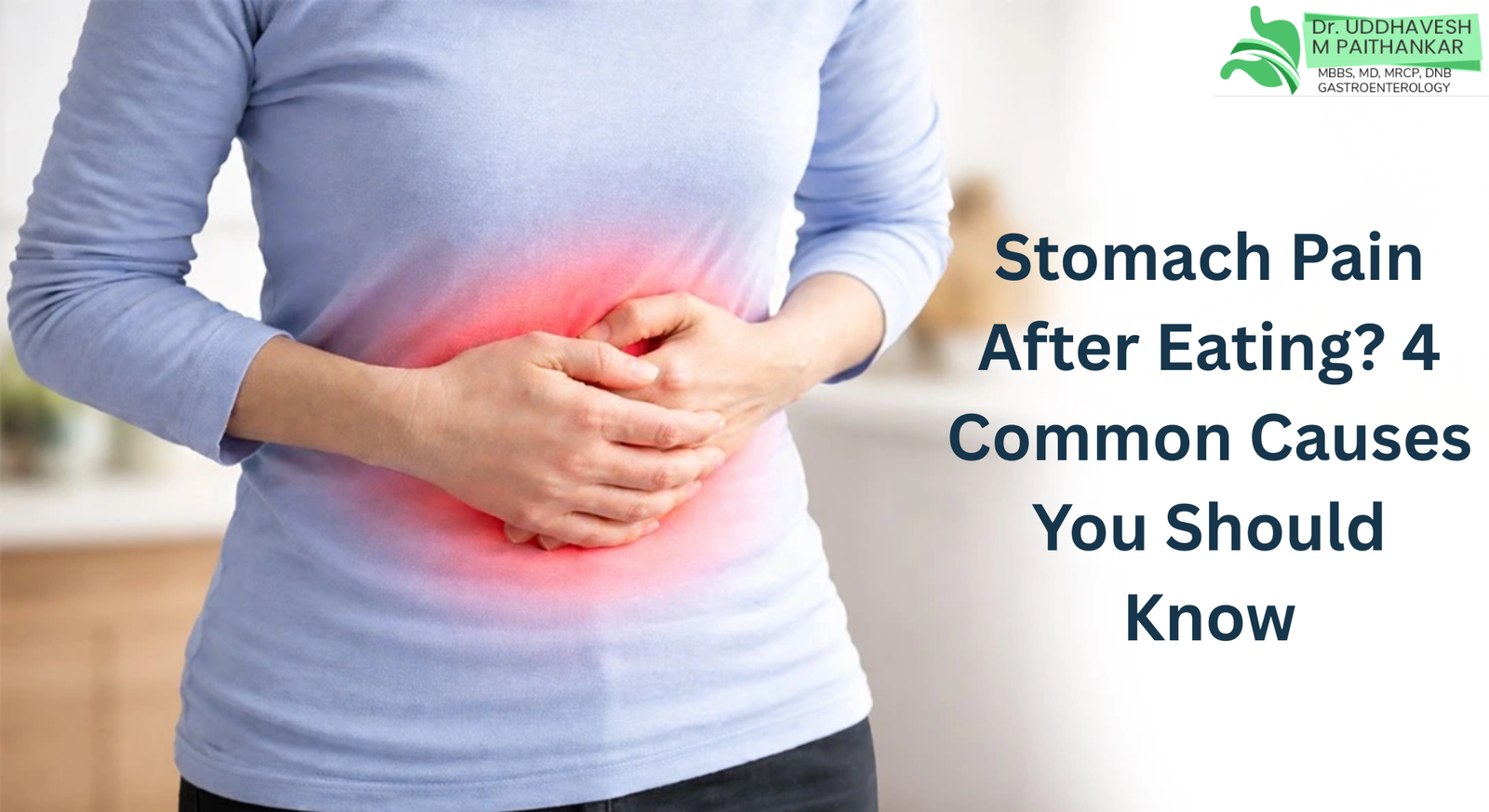
Have you ever finished a meal and suddenly felt a dull ache, burning, bloating, or uncomfortable heaviness in the stomach? Occasional discomfort may seem like something related to a particular meal. However, when stomach pain after eating keeps coming back, the recurring pattern deserves attention.
Post-meal stomach pain is common and can happen for several reasons. Sometimes the cause is simple indigestion or eating habits. In other cases, stomach pain after eating may be linked to acidity, gastritis, gallstones, ulcers, or other digestive conditions that require medical evaluation.
At Dr. Paithankars Speciality Clinic, Gurugram, Dr. Uddhavesh M. Paithankar, Senior Gastroenterologist, focuses on understanding the possible reason behind digestive symptoms instead of simply masking the discomfort.
What Does Stomach Pain After Eating Mean?
The location and nature of stomach pain after eating can provide useful clues. Burning in the upper abdomen, for example, can feel very different from cramping in the lower abdomen or sharp pain beneath the right ribs.
Understanding the pattern of stomach pain after eating can help a gastroenterologist identify possible causes and decide whether further evaluation is needed.
1. Indigestion and Gas
One of the most common reasons for stomach pain after meals is indigestion. Indigestion may occur after eating too quickly, having a large meal, or consuming foods that commonly trigger gas and bloating.
The digestive system needs to process the food consumed during a meal. Eating quickly can also lead to swallowing more air, which may contribute to bloating, fullness, and discomfort.
Common symptoms may include:
- Bloating
- Feeling unusually full after eating
- Burping
- Gas
- Mild abdominal discomfort
What can help?
Eating smaller portions, slowing down during meals, chewing food properly, and paying attention to foods that repeatedly trigger symptoms may help reduce digestive discomfort.
However, if stomach pain after eating becomes frequent or increasingly severe, the discomfort should not automatically be dismissed as gas.
2. Acidity, Acid Reflux or Gastritis
Acid-related problems can cause burning or discomfort in the abdomen, particularly after meals.
The stomach naturally produces acid to help digest food. A protective lining normally helps protect the stomach from this acid. Irritation or inflammation of this lining can lead to digestive symptoms.
Gastritis refers to inflammation or irritation of the stomach lining. Acid reflux occurs when stomach contents move back toward the food pipe.
Common symptoms may include:
- Burning sensation
- Upper abdominal discomfort
- Acidic or sour taste
- Heartburn
- Nausea
- Bloating
Spicy or heavy meals may trigger symptoms in some people, but food is not always the only factor. Certain medicines, infections, alcohol, smoking, and other factors may also contribute to stomach irritation.
If stomach pain after eating keeps returning, identifying the underlying cause is more useful than repeatedly assuming that acidity is responsible.
3. Gallstones and Gallbladder Problems
Pain after a fatty meal can sometimes be linked to gallstones or other gallbladder problems.
The gallbladder stores bile, a digestive fluid that helps the body process fats. Gallstones are hardened deposits that can sometimes interfere with the normal flow of bile.
Gallbladder-related pain commonly occurs in the right or upper-middle abdomen. In some cases, the discomfort may also travel toward the back or right shoulder.
Other symptoms may include:
- Pain after fatty or oily meals
- Nausea
- Vomiting
- Upper abdominal discomfort
- A feeling of fullness
Severe or persistent abdominal pain, especially when accompanied by fever, repeated vomiting, yellowing of the eyes or skin, or significant weakness, requires prompt medical attention.
4. Peptic Ulcer or Other Digestive Conditions
A peptic ulcer is a sore that develops in the lining of the stomach or the first part of the intestine. Some people experience burning or aching pain, while others may experience bloating, nausea, or discomfort related to meals.
Other digestive conditions can also cause stomach pain, including problems involving the pancreas or intestines.
This is why the pattern of stomach pain matters. The location, timing, duration, triggers, factors that improve or worsen the discomfort, and accompanying symptoms can all provide important information.
How Can You Tell If Your Stomach Pain Needs Attention?
A simple way to look at stomach pain is this: occasional mild discomfort may not always indicate a serious problem, but repeated or unexplained pain deserves evaluation.
Consider consulting a gastroenterologist if:
- Stomach pain after eating keeps returning
- Pain is becoming more frequent or severe
- Pain regularly follows certain meals
- There is unexplained weight loss
- Persistent nausea or vomiting occurs
- There is difficulty swallowing
- There is blood in the stool or black stool
- Symptoms continue despite dietary changes
Severe abdominal pain, fainting, vomiting blood, black stools, jaundice, or significant weakness can require urgent medical attention.
What Happens During a Gastroenterology Consultation?
Think of the consultation as putting together a puzzle. The stomach pain is one part of the picture. The timing, location, food triggers, duration, and associated symptoms provide additional pieces.
Depending on the symptoms and medical history, a gastroenterologist may recommend blood tests, an abdominal ultrasound, endoscopy, or other investigations.
Not everyone with stomach pain needs every test. The appropriate evaluation depends on the individual symptoms and the suspected cause.
Meet the Expert: Dr. Uddhavesh M. Paithankar
At Dr. Paithankars Speciality Clinic, patients are cared for by Dr. Uddhavesh M. Paithankar, Senior Gastroenterologist, at IFFCO Chowk Metro Station, Gurugram.
Dr. Paithankar’s approach focuses on listening carefully to the patient’s symptoms and understanding the possible underlying digestive problem. Instead of treating every episode of stomach pain as simple acidity, the aim is to consider the complete clinical picture and guide patients toward appropriate evaluation and treatment.
Doctor profile details such as qualifications, years of experience, hospital affiliations, and areas of interest should be added here once verified by the clinic.
Patient Voice
The following are sample placeholders and should be replaced with genuine, consented patient reviews before publication.
“I had been experiencing recurring stomach discomfort after meals and was unsure what was causing it. The consultation helped me understand that repeated symptoms should not simply be ignored.”
“The doctor listened carefully to my symptoms and explained the possible causes in a simple and understandable way.”
The Fix: Your Digestive Health Journey
| Step | What to Do |
| 1. Notice the Pattern | Track when stomach pain after eating occurs and which foods or meals seem to trigger it. |
| 2. Improve Eating Habits | Eat slowly, avoid very large meals, and chew food properly. |
| 3. Avoid Repeated Self-Medication | Do not keep treating recurring stomach pain as acidity without understanding the cause. |
| 4. Watch for Warning Signs | Pay attention to severe pain, vomiting, bleeding, jaundice, weight loss, or persistent symptoms. |
| 5. Consult a Gastroenterologist | Seek professional evaluation when stomach pain after eating keeps returning or interferes with daily life. |
The important thing is not to spend months guessing whether stomach pain is caused by “gas” or acidity. Repeated stomach pain after eating is a symptom, not a diagnosis.
Frequently Asked Questions
Why does my stomach hurt after I eat?
Stomach pain after eating can happen because of indigestion, gas, acidity, gastritis, gallstones, ulcers, or other digestive conditions. The exact cause depends on the location, timing, severity, and accompanying symptoms.
Is stomach pain after eating normal?
Occasional mild stomach discomfort can happen, but frequent or recurring stomach pain after eating should be evaluated. If stomach pain repeatedly occurs after meals or begins interfering with daily activities, the symptoms should not simply be treated as ordinary indigestion.
Why does my stomach hurt after eating food?
Oily or fatty meals can trigger discomfort and may worsen symptoms in people with indigestion, acid-related problems, or gallbladder disease. If fatty foods repeatedly cause stomach pain after eating, particularly in the upper abdomen, medical evaluation may be appropriate.
When should I see a gastroenterologist for stomach pain?
A gastroenterologist should be consulted when stomach pain after eating is persistent, recurrent, severe, or associated with symptoms such as vomiting, weight loss, bleeding, difficulty swallowing, or jaundice. Early evaluation can help identify the possible cause instead of relying on repeated self-medication.
Can acidity cause stomach pain after eating?
Yes. Acidity, acid reflux, and gastritis can cause burning or discomfort after meals. However, similar symptoms can occur with other digestive conditions. Recurring stomach pain after eating should therefore not automatically be labelled as acidity.
What tests might be needed for stomach pain after eating?
The tests depend on what the gastroenterologist suspects may be causing the symptoms. Tests may include blood tests, an abdominal ultrasound, endoscopy, or other investigations. The appropriate tests are decided after reviewing symptoms and medical history.
Next Steps: Do Not Keep Guessing About Your Stomach Pain
If stomach pain after eating has become a regular part of daily life, it may be time to understand why.
Dr. Paithankars Speciality Clinic is located at IFFCO Chowk Metro Station, Gurugram, making the clinic convenient for people seeking gastroenterology consultation in Gurugram.
Call +91 92115 81666
Book Your Gastroenterology Consultation Online
Clinic Address
Dr. Paithankars Speciality Clinic
IFFCO Chowk Metro Station, Gurugram, Haryana, India