
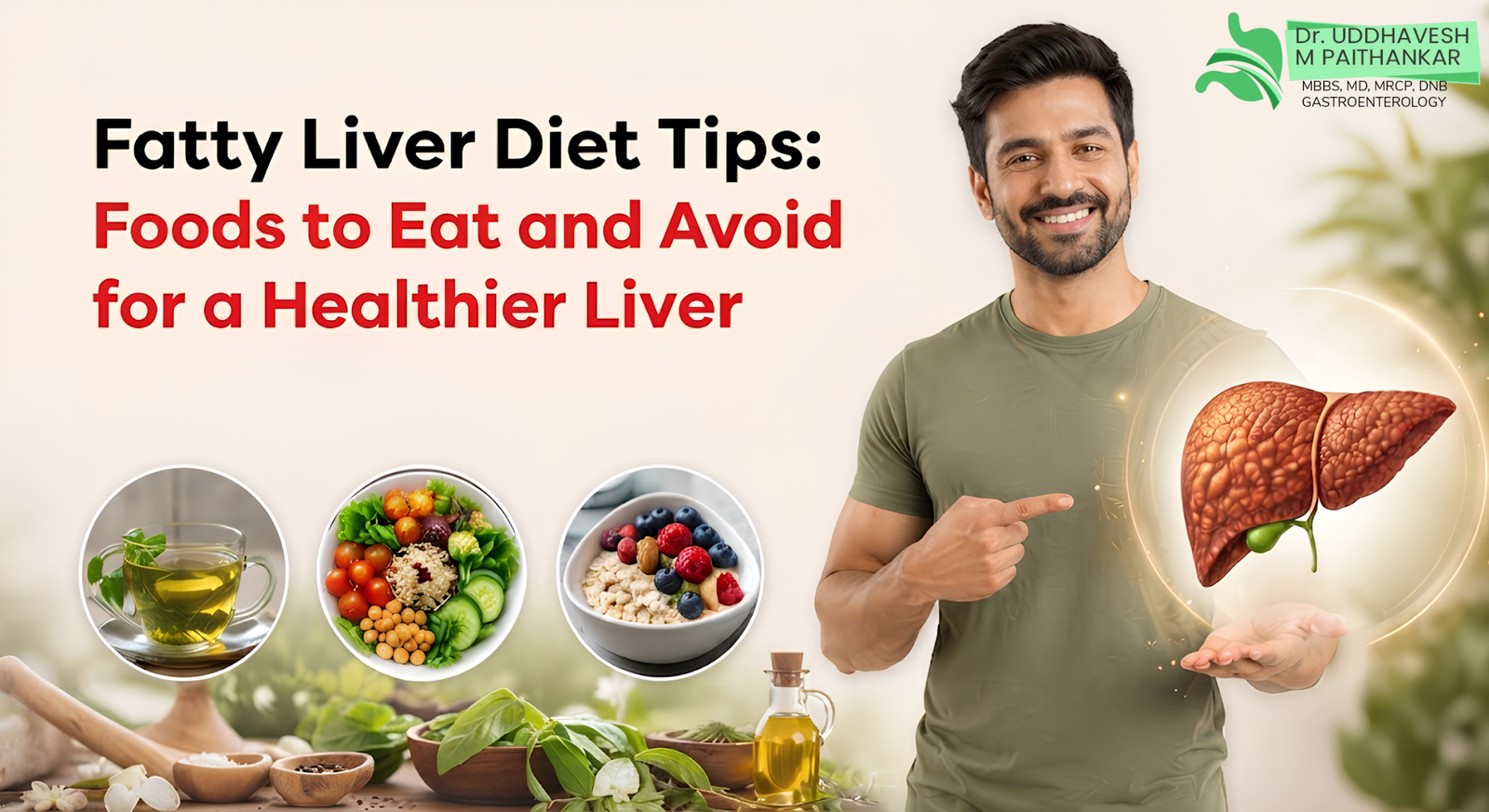
If you have been told that you have fatty liver, you may be wondering what you can actually eat. Can you eat rice? Is fruit okay? Should you stop eating fats? What about your morning tea or weekend treats?
The good news is that managing fatty liver does not mean you have to live on salads or follow a restrictive diet. In many cases, long-term changes in your food choices, portion sizes, physical activity and weight management can make a meaningful difference to liver health.
At Dr. Paithankar’s Clinic in Gurugram, patients can discuss fatty liver, digestive health and liver-related concerns with a gastroenterology specialist and receive an individualized approach rather than relying on internet diet myths.
What Is Fatty Liver?
Fatty liver occurs when excess fat builds up in the liver. It is commonly associated with metabolic conditions such as being overweight or obese, insulin resistance, type 2 diabetes, high cholesterol or triglycerides and metabolic syndrome.
You may also hear the term MASLD (metabolic dysfunction-associated steatotic liver disease). This term is used for fatty liver associated with metabolic risk factors.
Think of your liver as the body’s processing factory. When the body receives more energy than it needs, particularly in the presence of metabolic problems, some of that excess energy can be stored as fat in the liver.
Fatty liver does not always mean that a person has severe liver disease. However, in some people, it can progress to inflammation, liver scarring and more serious liver problems. This is why early evaluation and lifestyle management are important.
What Are the Common Signs of Fatty Liver?
One of the challenges with fatty liver is that many people have no obvious symptoms. It is often discovered during an ultrasound, routine health check-up or blood tests.
When symptoms do occur, they may include:
- Tiredness or low energy
- A feeling of discomfort or heaviness in the upper-right abdomen
- Abnormal liver function test results
- Weight gain or difficulty managing weight
- Diabetes or insulin resistance
- High cholesterol or triglycerides
Because symptoms can be mild or completely absent, proper medical evaluation is important if fatty liver is detected.
Fatty Liver Diet: What Should You Eat?
There is no single food that can magically cure fatty liver. Instead, the focus should be on an overall eating pattern that includes vegetables, whole foods, adequate fibre, lean protein and healthier sources of fat.
1. Eat More Vegetables
Try to make vegetables a regular part of your lunch and dinner.
Good choices include:
- Green leafy vegetables
- Carrots
- Beans
- Gourds
- Tomatoes
- Cauliflower
- Broccoli
- Capsicum
- Other seasonal vegetables
Vegetables are generally rich in fibre and nutrients while being relatively low in calories. Increasing vegetables can also make meals more filling.
2. Choose Whole Fruits Instead of Fruit Juice
Having fatty liver does not mean you have to stop eating fruit.
Whole fruits such as apples, oranges, guava, berries, papaya and pears can fit into a balanced diet.
The important difference is that whole fruit contains fibre, while fruit juice can make it easier to consume a large amount of sugar and calories quickly.
So, whenever possible, choose whole fruit instead of fruit juice.
3. Include Whole Grains
You do not necessarily have to completely stop eating carbohydrates or rice.
Depending on your overall diet and health needs, options can include:
- Oats
- Whole-wheat roti
- Brown rice
- Barley
- Other fibre-rich whole grains
Portion size matters. A moderate serving of rice combined with vegetables and a protein source can be part of a balanced meal.
The goal is not to eliminate one food group but to improve the overall quality and quantity of your meals.
4. Add Healthy Sources of Protein
Protein can help make meals more satisfying and support overall nutrition.
Depending on your individual health requirements, protein options may include:
- Dal and lentils
- Beans and chickpeas
- Eggs
- Fish
- Skinless chicken
- Unsweetened or low-fat curd/yogurt
- Tofu and other soy foods
- Nuts and seeds in moderate portions
If you have another medical condition, your doctor or dietitian may recommend specific adjustments to your protein intake.
5. Choose Healthier Fats
Having fatty liver does not mean that you need to completely eliminate fat from your diet.
The focus should be on reducing saturated and trans fats and choosing healthier sources of fat in appropriate portions.
Examples include:
- Nuts
- Seeds
- Fish
- Sources of omega-3 fatty acids
- Healthier cooking oils in moderate amounts
Try to reduce frequent consumption of deep-fried foods, foods prepared with large amounts of butter or highly processed snacks.
Fatty Liver Foods to Limit
Instead of thinking about foods as simply “good” or “bad,” consider three questions:
How often do I eat it? How much do I eat? What else is on my plate?
Small, sustainable changes are often easier to maintain than extreme restrictions.
Limit Sugary Drinks
This can be one of the most useful dietary changes.
Try to reduce:
- Soft drinks
- Sweetened beverages
- Energy drinks
- Sweetened tea or coffee
- Frequent fruit juice
- Other drinks containing added sugar
Drinks containing large amounts of sugar can add significant calories without making you feel as full as solid food.
For everyday hydration, water is a simple choice.
Cut Back on Fried and Highly Processed Foods
Frequent consumption of foods such as samosas, pakoras, chips, fries, fried chicken and processed snacks can make it more difficult to control calories and unhealthy fat intake.
Instead, try cooking methods such as:
- Baking
- Grilling
- Steaming
- Sautéing with limited oil
- Air-frying
You do not have to completely eliminate your favourite foods. The goal is to make them occasional rather than everyday choices.
Watch Sweets and Refined Carbohydrates
Foods such as sweets, cakes, pastries, biscuits, sugary cereals and desserts can add substantial amounts of sugar and calories.
An occasional treat can fit into an otherwise balanced lifestyle. The concern is when these foods become a regular part of the diet.
Be Careful With Alcohol
If you have fatty liver, discuss alcohol consumption with your doctor.
Alcohol can affect liver health and may be particularly concerning when other liver conditions or metabolic risk factors are present. Your doctor can advise you based on your individual liver health and test results.
Why Does Weight Loss Matter for Fatty Liver?
For people who are overweight or have obesity, gradual weight loss can help reduce fat in the liver and may improve liver inflammation and scarring.
According to the National Institute of Diabetes and Digestive and Kidney Diseases (NIDDK), losing around 3%–5% of body weight can reduce liver fat, while greater weight loss may be needed to improve liver inflammation and scarring.
The important word is gradual.
Rapid or extreme weight-loss diets are not the goal. Sustainable changes in eating habits, physical activity and overall lifestyle are generally more practical for long-term liver health.
Physical activity may also benefit fatty liver even when significant weight loss does not occur. Therefore, regular movement can be an important part of your overall plan, provided it is appropriate for your health.
How to Build a Fatty Liver-Friendly Indian Meal
You do not need to completely change your traditional Indian kitchen to start eating better.
A simple plate approach can help:
| Meal Component | Practical Choice |
| ½ plate | Vegetables or salad |
| ¼ plate | Protein such as dal, fish, chicken, beans or tofu |
| ¼ plate | Roti, brown rice or another whole grain |
| Drink | Water or an unsweetened beverage |
| Snack | Whole fruit, nuts or unsweetened yogurt |
Start with one or two realistic changes instead of trying to change everything at once.
For example, you could begin by replacing a sugary drink with water and adding an extra serving of vegetables to one meal each day.
Meet the Expert: Dr. Uddhavesh M. Paithankar
Dr. Uddhavesh M. Paithankar is a gastroenterologist in Gurugram with expertise in gastroenterology and liver-related conditions.
According to his clinic profile, he completed his medical training at GMC Bhopal and pursued further training in gastroenterology and liver diseases. He also holds MRCP from the Royal College of Physicians, London.
His areas of expertise include procedures such as:
- Endoscopy
- Colonoscopy
- ERCP
- Endoscopic ultrasound
- Gastrointestinal and liver-related care
His clinic describes an approach focused on patient care, clear diagnosis and individualized treatment.
For fatty liver, this individualized approach matters. Managing the condition is not simply about being told to “eat less.” Your weight, blood sugar, cholesterol, medications, alcohol intake, physical activity and liver test results can all influence the right management plan.
A Simple Fatty Liver Improvement Timeline
There is no fixed timeline for fatty liver improvement because every person’s health and degree of liver disease are different.
However, a practical lifestyle approach may look like this:
| Time | What to Focus On |
| Week 1–2 | Reduce sugary drinks, fried foods and oversized portions |
| Weeks 3–6 | Build meals around vegetables, protein and whole foods |
| Weeks 6–12 | Maintain physical activity and work toward healthy weight management |
| Ongoing | Follow medical advice, monitor relevant tests and maintain healthy habits |
The most important factor is consistency rather than perfection.
Frequently Asked Questions About Fatty Liver Diet
1. What should I eat if I have fatty liver?
Focus on vegetables, whole fruits, whole grains, legumes, lean protein and moderate amounts of healthier fats. Your overall eating pattern is more important than relying on a single “liver-friendly” food.
2. Can I eat rice if I have fatty liver?
Yes. Rice can often be included in a fatty liver-friendly diet when consumed in appropriate portions. Consider combining rice with vegetables and a protein source and choosing higher-fibre grains when suitable.
3. Which foods should I avoid with fatty liver?
Try to limit sugary drinks, frequent sweets, highly processed foods, fried foods and foods high in saturated or trans fats. Portion control is also important.
4. Is fruit good for fatty liver?
Whole fruit can be part of a balanced fatty liver diet. Whole fruit is generally preferable to fruit juice because it contains fibre and can be easier to consume in appropriate portions.
5. Can fatty liver be improved with diet?
Yes, fatty liver can improve with lifestyle changes, particularly when excess weight, insulin resistance or other metabolic risk factors are involved. The amount of improvement varies from person to person and depends on factors such as inflammation and liver scarring.
6. When should I see a liver or gastroenterology specialist?
Consider discussing fatty liver with a doctor if it has been detected on an ultrasound, your liver blood tests are abnormal, or you have risk factors such as diabetes, excess weight, high cholesterol or triglycerides.
A specialist can help determine whether additional testing or monitoring is needed.
Take the Next Step: Visit Dr. Paithankar’s Clinic in Gurugram
You do not have to figure out your fatty liver diet on your own.
If you have been diagnosed with fatty liver, have abnormal liver tests or are concerned about your digestive or liver health, a consultation can help you understand your risk factors and develop an appropriate management plan.
Dr. Paithankar’s Clinic
Call Now: 094796 92613
Clinic Address:
Unit No. 394, Ground Floor
Near IFFCO Chowk Metro Station, Sector 29
Gurugram, Haryana – 122022