
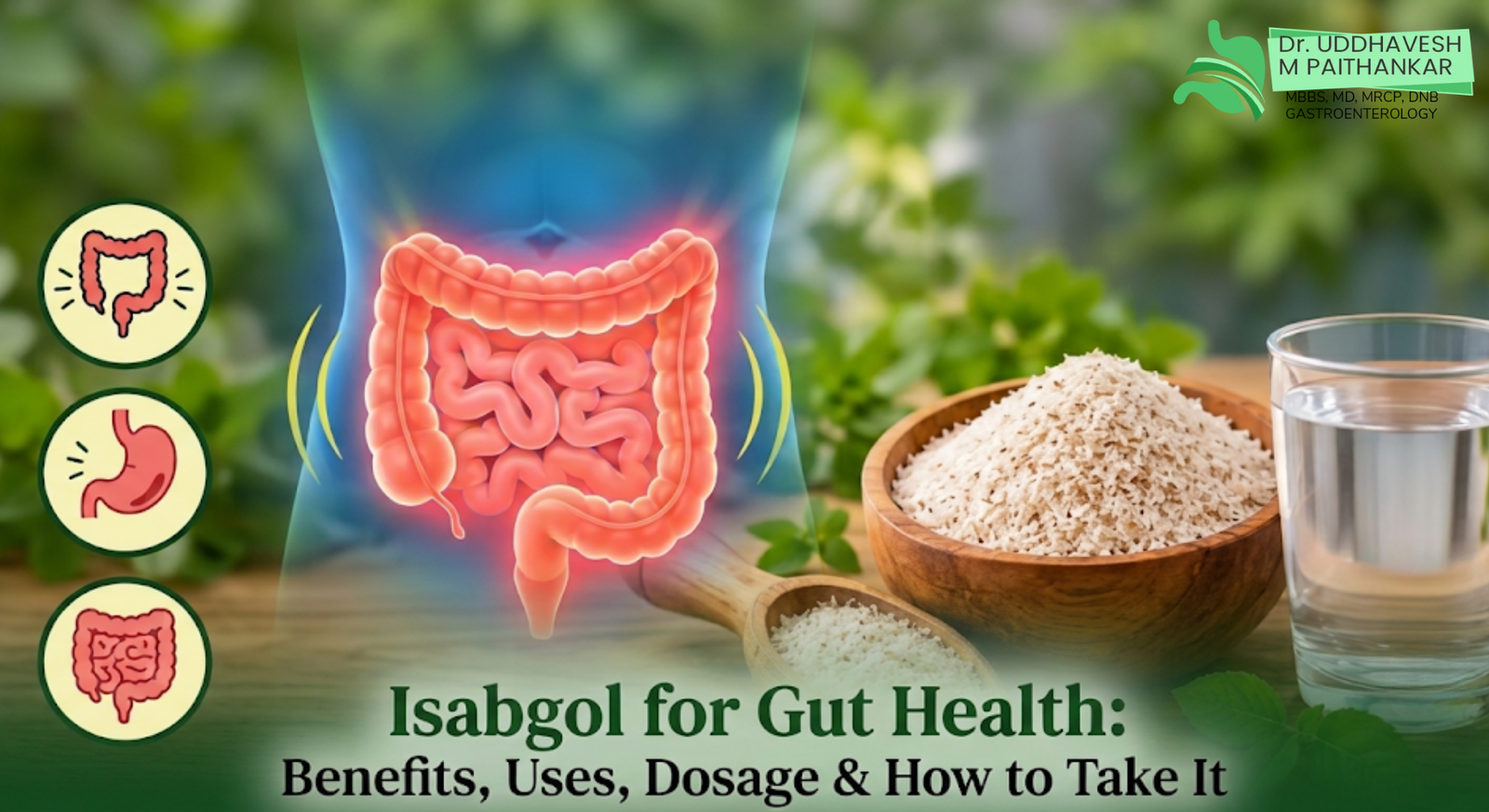
Digestive problems such as constipation, bloating, irregular bowel movements, and stomach discomfort can affect your daily routine and overall quality of life. Whether you frequently experience difficulty passing stools or simply want to improve your digestive health, maintaining a healthy gut is essential for overall well-being.
One natural source of dietary fibre that has been traditionally used to support digestion is Isabgol, also known as Psyllium Husk. Rich in soluble fibre, Isabgol helps regulate bowel movements, soften stools, and support digestive health when consumed correctly.
But is Isabgol really beneficial for gut health? How does it work, and what is the right way to consume it?
In this blog, we will explore the 7 important benefits of Isabgol, its uses, how to take it safely, possible side effects, and expert digestive health guidance at Dr. Paithankars Clinic in Gurugram.
What Is Isabgol and How Does It Help Gut Health?
Isabgol is a natural dietary fibre obtained from the seeds of the Plantago ovata plant. It is commonly available in the form of husk or powder and is widely used to manage constipation and promote regular bowel movements.
What makes Isabgol special is its ability to absorb water and form a gel-like substance inside the digestive tract.
Think of it as a natural sponge. When Isabgol comes into contact with water, it absorbs moisture, increases stool bulk, and helps make bowel movements easier and more comfortable.
How Does Isabgol Work in Your Body?
Isabgol supports digestion through several mechanisms:
- Absorbs water: Forms a gel-like substance inside the digestive tract.
- Adds bulk to stools: Increases stool volume and supports regular bowel movements.
- Softens stools: Makes hard stools easier to pass.
- Regulates bowel movements: Helps improve stool consistency.
- Supports digestive function: Adds soluble fibre to your daily diet.
7 Important Benefits of Isabgol for Gut Health
Adding Isabgol to your daily routine may offer several digestive health benefits. However, its effectiveness depends on your diet, hydration, medical history, and how consistently you use it.
1. Helps Relieve Constipation Naturally
Constipation is one of the most common digestive problems. It may cause hard stools, excessive straining, incomplete bowel movements, and abdominal discomfort.
Isabgol absorbs water in the intestines, increases stool bulk, and softens stools, making them easier to pass.
It can be particularly helpful for people whose constipation is associated with insufficient dietary fibre or poor eating habits.
2. Promotes Regular Bowel Movements
Do you frequently experience irregular bowel movements?
A fibre-rich diet plays an important role in maintaining digestive regularity. Isabgol helps improve stool consistency and supports a more predictable bowel routine.
Regular bowel movements can also help reduce discomfort and improve your overall digestive well-being.
However, persistent changes in bowel habits should always be evaluated by a healthcare professional to identify the underlying cause.
3. Helps Manage Both Hard and Loose Stools
One of the unique properties of psyllium husk is its ability to regulate stool consistency.
Its water-absorbing properties help soften hard stools. It can also absorb excess water from loose stools, making them more formed.
This makes Isabgol useful for certain bowel-related conditions, including some cases of constipation and diarrhoea.
However, persistent diarrhoea requires medical evaluation, especially when accompanied by fever, dehydration, blood in stools, or severe abdominal pain.
4. Supports a Healthy Gut Environment
Your digestive system contains numerous microorganisms, including beneficial gut bacteria that play an important role in digestion.
Dietary fibre helps maintain a healthy gut environment. Certain types of fibre are fermented by gut bacteria, producing substances called short-chain fatty acids.
Although psyllium is primarily recognised for improving stool consistency and bowel regularity, it also contributes to your daily soluble fibre intake.
For better gut health, combine Isabgol with a balanced diet containing fruits, vegetables, whole grains, legumes, and adequate fluids.
5. May Reduce Straining During Bowel Movements
Excessive straining while passing stools can cause discomfort and may worsen conditions such as haemorrhoids (piles) and anal fissures.
By increasing stool bulk and retaining water, Isabgol can make bowel movements easier and potentially reduce the need for straining.
This can be particularly beneficial for individuals experiencing discomfort due to hard stools.
If you notice rectal bleeding, persistent pain, or recurring discomfort, consult a doctor instead of relying solely on home remedies.
6. May Help Maintain Healthy Cholesterol Levels
Isabgol offers benefits beyond digestive health.
Research suggests that psyllium’s soluble fibre may help reduce LDL cholesterol, commonly known as bad cholesterol, when included as part of a healthy diet.
It works partly by binding to bile acids in the digestive tract. This encourages the body to use cholesterol to produce more bile acids.
However, Isabgol should not replace prescribed cholesterol medications, dietary modifications, or medical advice.
7. May Support Blood Sugar Management
Soluble fibre forms a gel-like substance in the digestive tract, which can slow down the absorption of carbohydrates.
This may help reduce sudden increases in blood sugar levels after meals in some individuals.
People with diabetes should consult their doctor before starting Isabgol, particularly if they take blood sugar-lowering medications, as dietary fiber may affect glucose levels and medication absorption.
How to Take Isabgol for Better Digestion?
Understanding how to consume Isabgol correctly is just as important as knowing its benefits.
Here are some general guidelines:
- Mix the recommended quantity of Isabgol with a full glass of water.
- Stir thoroughly to ensure the husk is properly mixed.
- Drink immediately before the mixture becomes too thick.
- Maintain adequate hydration throughout the day, unless your doctor has advised fluid restriction.
- If recommended by your healthcare professional, start with a smaller amount and gradually increase it.
The appropriate dosage depends on your age, health condition, and the specific product you are using. Always follow the product instructions or your doctor’s recommendation.
Can You Take Isabgol with Milk?
Yes, some people prefer mixing Isabgol with milk. However, water is a convenient option for consuming psyllium husk.
Always follow the product instructions and consult your doctor if you have any underlying digestive problems or dietary restrictions.
How Long Does Isabgol Take to Work?
Isabgol may start improving bowel movements within 12–24 hours in some individuals. However, it may take two to three days for others to experience noticeable results.
The response varies depending on the individual, dosage, hydration, and severity of constipation.
Is Isabgol Safe for Everyone?
Isabgol is generally considered safe for most people when consumed correctly and with sufficient liquid. However, it may not be suitable for everyone.
Some possible side effects include:
- Gas and bloating
- Mild abdominal discomfort
- Increased flatulence
- Temporary changes in bowel habits
Important Precautions While Taking Isabgol
Keep the following safety precautions in mind:
- Never consume Isabgol dry: Always mix it with sufficient liquid before drinking.
- Maintain a gap from medications: Psyllium may affect the absorption of certain medicines. A gap of around two hours is commonly recommended, but some medicines require different timing. Ask your doctor or pharmacist.
- Avoid self-medication if you have swallowing difficulties: Isabgol can cause choking or obstruction if it is not swallowed properly.
- Consult your doctor if you have intestinal problems: People with a history of intestinal blockage or unexplained abdominal pain should seek medical advice before using it.
Seek immediate medical attention if you experience difficulty breathing or swallowing, or severe abdominal pain after taking Isabgol.
You should also consult a doctor if constipation persists, worsens, or is accompanied by blood in stools, unexplained weight loss, or a significant change in bowel habits.
What Can You Do to Improve Your Gut Health?
While Isabgol can support digestive health, it should not be the only strategy for maintaining a healthy digestive system.
Your everyday habits play an important role in how well your digestive system functions.
Consider incorporating these healthy practices into your routine:
- Eat fibre-rich foods: Include fruits, vegetables, oats, whole grains, and lentils in your meals.
- Stay hydrated: Drink sufficient water throughout the day.
- Stay physically active: Walking and regular exercise can support bowel movements.
- Maintain a bathroom routine: Avoid ignoring the natural urge to pass stools.
- Choose balanced meals: Limit excessive consumption of processed and low-fibre foods.
- Get adequate sleep: Maintain a consistent sleep schedule and manage stress.
These simple lifestyle changes, combined with appropriate dietary fibre intake, can help support long-term digestive health.
Meet the Experts at Dr. Paithankars Clinic, Gurugram
When digestive problems occur frequently, seeking professional medical guidance is important.
At Dr. Paithankars Clinic in Gurugram, patients can seek guidance regarding digestive health concerns, dietary habits, and the importance of identifying the underlying causes of persistent symptoms.
Instead of depending entirely on home remedies or over-the-counter fibre supplements, it is important to understand your symptoms and follow an appropriate healthcare plan.
The right approach to digestive health begins with understanding your body’s needs and choosing suitable treatment options.
What Does the Digestive Health Consultation Process Look Like?
If you experience recurring constipation or other digestive problems, a structured medical consultation can help identify the underlying issue and determine an appropriate treatment approach.
| Step | What Happens |
| Step 1: Consultation | Discuss your symptoms, medical history, lifestyle, and dietary habits. |
| Step 2: Medical Evaluation | Assess possible causes of your digestive problems and recommend investigations if required. |
| Step 3: Personalised Guidance | Receive suitable dietary, lifestyle, and healthcare recommendations. |
| Step 4: Treatment Planning | Follow the treatment plan recommended by your healthcare professional. |
| Step 5: Follow-Up | Monitor your progress and modify the treatment approach if necessary. |
Every individual is different. The duration of treatment and recovery depends on the underlying condition and response to treatment.
Frequently Asked Questions About Isabgol for Gut Health
1. Is Isabgol good for gut health?
Yes. Isabgol can support digestive health by improving stool consistency, increasing stool bulk, and promoting regular bowel movements. It is a good source of soluble fibre and works best when combined with a balanced, fibre-rich diet.
2. Can I take Isabgol every day?
Some individuals can consume Isabgol daily if it is appropriate for their health. However, long-term use should be discussed with a healthcare professional, particularly if you have recurring constipation or take regular medications.
3. Should I take Isabgol with normal water or cold water?
Isabgol can be mixed with either normal or cold water. The important thing is to use sufficient liquid, mix it properly, and drink it immediately.
4. Does Isabgol help with bloating and gas?
Isabgol may improve bowel movements, which can help some people experiencing digestive discomfort. However, it may initially cause gas and bloating in certain individuals.
Starting with a lower recommended quantity and gradually increasing fibre intake may help. Persistent bloating should be evaluated by a doctor.
5. How long does Isabgol take to relieve constipation?
Isabgol may start working within 12–24 hours for some individuals, while others may need two to three days. Follow the product instructions and consult a doctor if constipation persists or worsens.
6. Can people with diabetes take Isabgol?
People with diabetes may be able to take Isabgol. However, they should consult their healthcare professional before starting it, as soluble fibre may influence blood sugar responses and the absorption of certain medications.
Visit Dr. Paithankars Clinic for Digestive Health Guidance
Taking care of your digestive system starts with understanding your body and making informed lifestyle choices.
If you frequently experience constipation, irregular bowel movements, bloating, or persistent digestive discomfort, seeking professional medical advice can help identify the underlying cause and explore appropriate treatment options.
At Dr. Paithankars Clinic, Gurugram, take an informed step towards better digestive health.
Clinic Name: Dr. Paithankars Clinic
Address: Unit No. 394, Ground Floor, Near IFFCO Chowk Metro Station, Sector 29, Gurugram, Haryana – 122009.
Number: 094796 92613